

Fertiliser and fuel cost surges are threatening to wipe out margins for most grain growers, potentially leaving some with profit as little as $11 per hectare.
Soaring input prices, alongside supply uncertainty, are squeezing farm budgets as experts warn the higher costs could strip profits from the majority of grain growing farms.
Leading NSW farm consultant John Francis, of Agrista in Wagga Wagga, modelled the impact of a 50 per cent rise in fuel and fertiliser on crop margins, if all other costs and grain prices remain constant.
He found average crop rotations that delivered a profit of $192/ha last year could fall to just $11/ha.
By contrast, the top 20 per cent of farmers, who generate on average an additional $250/ha than the industry mean ($1700/ha versus $1450/ha) are more insulated from the input shock.
The other 80 per cent, or average performing crop results, were not protected from the increased costs.
“With a 50 per cent increase in fuel and fertiliser costs and no changes in production or other costs, nearly all of the $200/ha profit margin is eroded,” Mr Francis said.
For the modelling, Mr Francis used Agrista’s benchmarking dataset, which tracks crop rotations on a dollars per hectare per 100mm of‑rainfall basis from southern Australian zones averaging 550mm in 2025, and overlaid a 50 per cent increase in both fertiliser and fuel costs.
Agrista’s figures show top operators generate more income from similar input costs.
“The key difference is they can drive more income out of the investment,” Mr Francis said.
He pointed to planning and timing of operations and in crop applications – including sowing, weed and disease control, and harvest – as the critical factors. “The biggest thing now is don’t panic,” Mr Francis said.
“ Just slow down, plan input requirements and timings and try to make rational decisions.
“Yield potential and nitrogen requirements differ depending on crop rotation, paddock history and soil moisture levels – just to mention a few.
“The business case for inputs changes with the price of the input, so budgeting can assist in estimating specific requirements.”
This comes as Prime Minister Anthony Albanese warned on Monday that even if the Middle East conflict ended shortly “there would still be a long economic tail to reckon with”.
“The stable, predictable world of ever-expanding free trade is gone – and it will not be returning any time soon,” Mr Albanese said.
Rabobank analyst Paul Joules said the latest urea price spike – which has seen quotes up to $1600 per tonne – was comparable to the start of the Russian invasion of Ukraine in 2022.
But Mr Joules said that this time grain prices were not “astronomically high” to offset the hit. Now, margins were “already an issue” due to lower grain returns.
“Factor in a 60 per cent price rise for urea, and more at retail, and margins will take a massive hit,” Mr Joules said.
“It is certainly not a level playing field globally now, there are two categories for major agricultural producers – those who are self-sufficient on inputs like China and Russia and those who are not, which varies depending on the global supply chains, and Australia is in that side of the equation.”
Mr Joules urged farmers to seek reliable information to base decisions on.
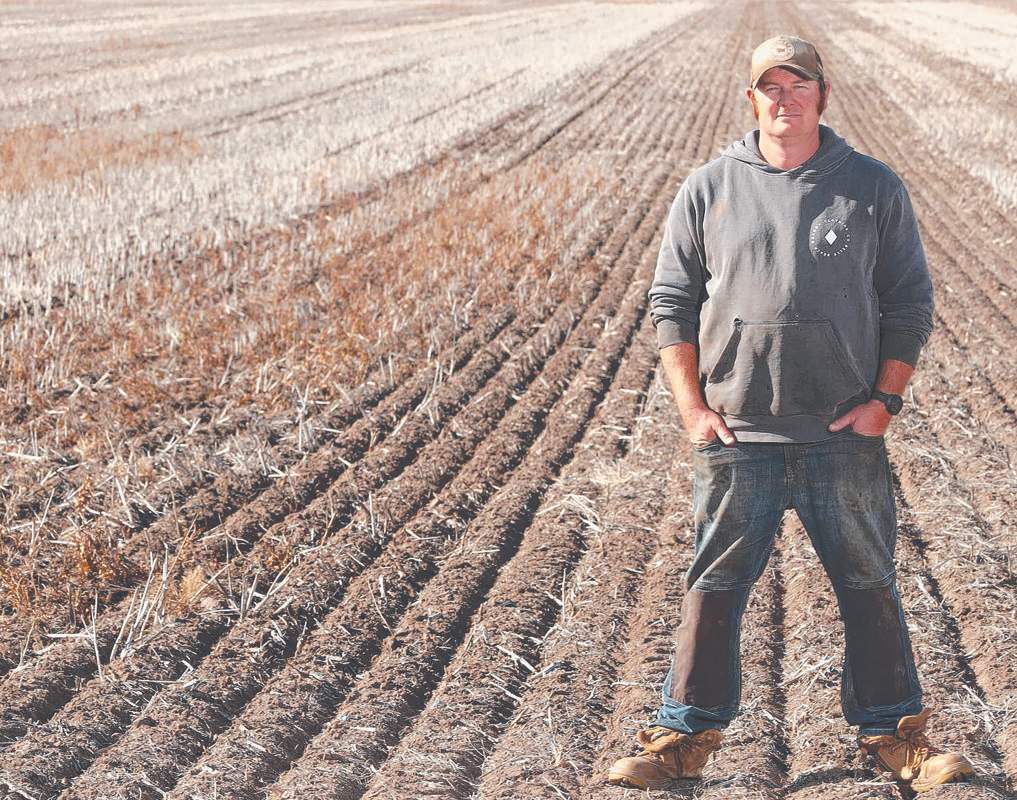
Murra Warra farmer David Jochinke said grain growers faced “huge unknowns” but “shouldn’t panic”.
“Our industry has so many variables they have no control over as it is, and now this – it is going to be a wild ride,” he said.
“A lot of people will struggle to break even without continuity of supply.
“I haven’t changed our (sowing plans for crop) rotations as yet – we may put a few more legumes in – but I can see that our yields are likely to get touched up if urea isn’t available or we don’t have the funds to maximise yields.
“Farmers in our district are all nervous, most of us have what we need lined up to get crop in but it is what happens beyond that.”
Mr Jochinke said timing of inputs was more critical than price at this stage.
“The sky isn’t falling yet, so we just need to make good decisions with what we can control, at each step of the way, as we have no idea how long this will last.”
Stewart Hamilton farms country near Cressy and Wycheproof and said while rising prices for both fuel and fertiliser were concerning, he was confident of supply.
He said loyalty to suppliers would pay off.
“We’ve been told we will get fuel, just that it might be delivered in five days and not two,” he said.
“There’s a lot of talk and noise about at the moment and while we might need to pay a bit more, I don’t think supply will be an issue.
“As an industry, we need to work together and not panic.”
Hamilton farmer and Mecardo analyst Angus Brown said livestock businesses were less exposed than cropping.
“The timing of autumn and winter rainfall will likely impact profitability more than higher urea or diesel prices,” Mr Brown said. “There may be some impacts on productivity, especially if the break is late in southwest Victoria, and northeast NSW, with annual grass pastures and urea becoming a more important tool in years when good winter grass growth is needed to compensate for little or no autumn growth.”