Producers roll the dice again
PRICING OUTLOOK
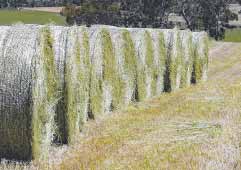
Price dilemma: Low hay prices and high carry-over stocks have been a barrier to cutting more fodder this season.
Picture: ZOE PHILLIPS
Picture: ZOE PHILLIPS


SINCE the east coast drought, graziers have enjoyed two favourable seasons providing ample supplies of hay and silage and generous standing dry feed during summer.
Accordingly, hay prices are soft, especially for cereal hay.
For the past nine months the median price for cereal hay has remained flat, trading within the range of $170 to $195 a tonne delivered to farms in the Goulburn Valley.
So why are hay producers storing uncommitted hay in sheds this season? Why are they rolling the dice once more for a commodity with such an uncertain market outlook? Is it blind faith or is it a savvy market insight that drives these producers? There’s an irony with markets.
Prices never look more bearish than when they are at their lowest. Could we be at the low price point for hay now? Given the two big production years, subdued domestic and export demand and low prices, there has been an increased carryover of hay during last spring and this.
This hay is stored either in the producers’ sheds or purchased for bargain basement prices late in the season and stored on grazier’s farms.
Low prices and these carryover stocks have been a strong barrier to cutting more fodder this season. Rather than carry over hay and take up shed space, hay growers have agreed to sell hay to their neighbours who were intending to cut hay in spring.
Incentives for livestock producers to rebuild the cattle herd and sheep flock has been strong. Pasture and fodder stocks are abundant and cattle prices have been reaching new records.
According to Meat and Livestock Australia, slaughter and live export numbers are slipping and the price premium for female cattle and calves has increased. After the 7 per cent rise in the national cattle herd this year, MLA forecasts a further 5.5 per cent rise in cattle numbers next year, bringing the herd size to over 27.87 million head, similar to the predrought numbers of 2017.
The pace of the rebuild is much faster in the sheep sector.
With slaughter lower than expected and a higher retention of ewes, the national flock is forecast to reach 75 million sheep by 2023, the highest since 2013.
What if we don’t get a third amazing winter and spring growing season next year? We could end up with more stock fed from reduced paddock feed, reliant on a lower fodder production base from this season and higher prices.
These are the possibilities that hay growers contend with each year.
— COLIN PEACE