




Major vegetable growers are on the brink of “ploughing in” instead of harvesting some crops while broadacre irrigators say rice and grain crops offer “no commercial reality”, as skyrocketing fuel and fertiliser costs bring Australia’s food security into question.
Victorian Farmers Federation grains president Ryan Milgate said growers nationwide were “super concerned” about inputs.
“The government has got to ensure farmers (have the fuel to) plant and harvest their crops, it would be a travesty if there is a shortage of fuel later – it just cannot happen – but I am not sure they are taking food security seriously at all,” he said.
“Agriculture absolutely must be considered an essential service – what is more essential than food?”
The federal government has failed to deem agriculture essential in its four-stage fuel plan, which nominates life support services, utilities and emergency services as critical sectors.
Leaders this week continued to call for calm as the Middle East war rages, with Attorney-General Michelle Rowland downplaying the need for fuel rationing, noting new arrangements with Japan and Singapore to secure supplies. It comes as many major southeastern cropping regions enjoyed an early autumn break and the start of sowing. But in other regions in the Western District of Victoria and in NSW, north of Wagga Wagga, in the central west and New England, farmers are waiting on decent rain.
On Monday, diesel was selling at fuel stations for just above $3 a litre, which was 10-20 cents cheaper than before the fuel excise cut was introduced.
Farmers report urea is hovering at $1300-$1400 a tonne.
In Western Australia, York farmer Rhys Turton said while parts of the Wheatbelt received a good break, it felt like “unprecedented times”.
Mr Turton said crops were being sown, some programs were being changed on the run and some paddocks would not be sown at all as growers worked out what “might break even and what could end up being too big a loss”.
NSW rice and grain grower Chris Morshead, of Yenda, said at the moment “there is no commercial reality in some of the decisions being made to grow crops”.
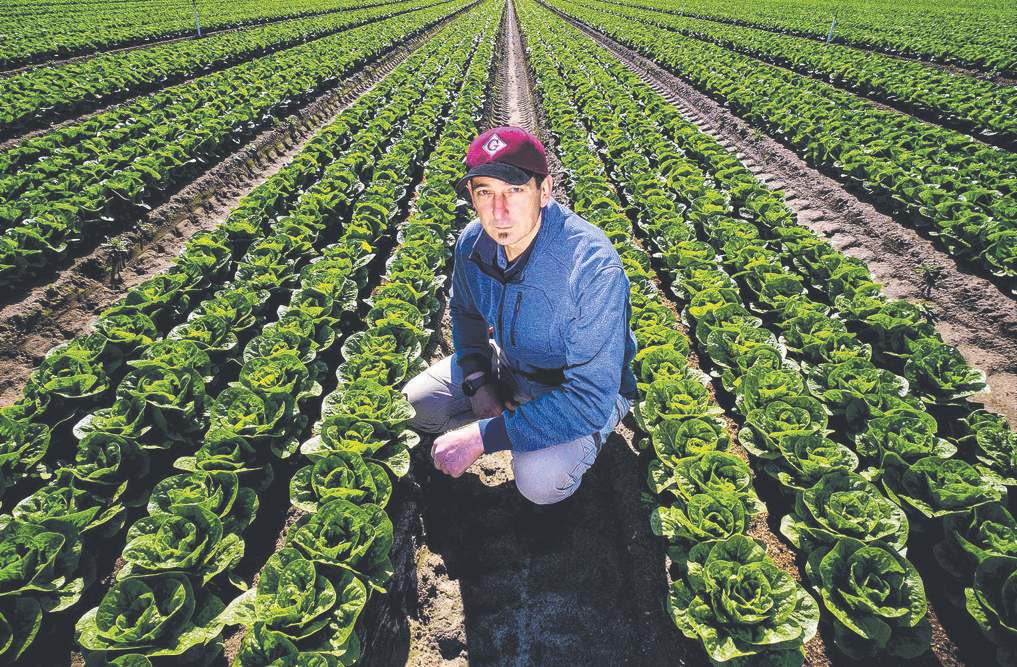
AusVeg Victoria chairman and Somerville vegetable grower Paul Gazzola – who supplies leafy greens to buyers on the East Coast and into Darwin – said growers were making decisions on “do we harvest it, or do we plough it in”.
“We’re looking at the costs of getting product to destination, labour, packaging, and working out if that is below the cost of production – are we better off leaving it in the paddock,” he said.
“That’s the commercial decisions I’m making. But I employ 150 people, I want to try to keep them employed.”
If he could ask the government to do one thing tomorrow, Mr Gazzola would “tell them to dig, dig”, for oil, coal and uranium to turn into energy here, saying food security and energy security were two sides of the same coin.
“The biggest issue this country has is we do not take food security seriously and we never have, we are too comfortable,” he said.
“The green agenda is killing this country – we are resources-rich but squandering it, we should be (energy) self-sufficient but are now the joke of the world.
“A lot of people are going to get hurt by this, across the economy, and many growers may or may not be here after this is over.”
He said he was pushing his agents to secure him higher prices for produce, as profitability was “borderline” now.
Last week, NFF Horticulture Council chairman Jolyon Burnett wrote to major supermarkets, urging them to “respond promptly and reasonably to price increase requests currently being advanced by fresh produce suppliers as a result of sharply rising fuel costs”.
He wrote higher “costs cannot be absorbed indefinitely without serious consequence” and could lead to “reduced domestic production, future (food) shortages, and more pronounced price volatility for consumers”.
Mr Burnett told The Weekly Times smaller fresh food businesses could “go to the wall” if prices did not increase and the federal government failed to prioritise agriculture as essential service for inputs.
“We don’t expect supermarkets to cop all the pain, but to share some of the pain a bit,” he said.
“Margins growers are operating on are insanely tight and they can’t stockpile fertiliser and fuel even if it is available, they are running hand-tomouth and can’t be expected to absorb a 20-30 per cent increase in fuel costs. I don’t want to cry wolf, but it is difficult to see how some of the smaller family farmers will survive.”
Mr Burnett doubled down on calls for agriculture to be defined an essential services in the four-stage national fuel plan. “It must be, to keep fresh produce on people’s tables.”
In response to calls for price increases, a Coles spokesman said: “Coles’ long-term, direct relationships with suppliers, including Australian farmers, mean we are able to work with them to manage their own cost pressures, support continuity of supply and smooth the impact on consumers. Our first priority will always be to mitigate any change from flowing through to the shelf.”
A spokesman for Aldi said: “We are committed to working with our suppliers to review pricing and any requests on an ongoing basis, in order to be a fair business partner.”
Paul Liston
Skipton, Victoria
Cropping
“People aren’t changing plans too much, it’s more about being realistic around the price of urea and whether it’s viable. Most have enough fertiliser to get a crop in, it’s the finishing doses that will make the difference.”
Ryan Milgate
Minyip, Victoria
Grain grower
“We have good subsoil moisture and will start sowing this week. I have changed my rotation to more lentils to reduce the need for nitrogen later in the season as I think I have more chance making a reasonable profit on them.”
Lachie Bell
Kangaroo Island, South Australia
Cropping
“We’ve had to pull fertiliser rates back to meet budget, from 100 per cent to more like 70 to 80 per cent, and we’ll adjust that through the season depending on where wheat and barley prices sit, while fuel remains a pressure point with limited storage leaving us exposed to price swings... We’ll need a decent break, ideally around Anzac Day, to be properly set up.”
Rhys Turton
York, Western Australia
Cropping
“Sentiment is a bit low but there’s still some hope, it’s the unknowns around fuel and fertiliser, particularly nitrogen, that are unsettling everyone. Fuel supply is inconsistent with prices jumping from around $2.80 to $3.24 a litre and only about 40 per cent of orders being filled, which is hitting cost of production and profitability.”
Mark Lambert
Sunnyside, Tasmania
Organic dairy
“We’re organic, so fertiliser has zero impact on us... Power is going to be impacted because it’s related to gas and diesel prices.”
Chris Morshead
Yenda, NSW
Winter and summer cropper
“We’ve had no rain, no subsoil moisture and we’ve crunched the numbers and can’t make most gross margins work on the cost of water at $500/ML and commodity prices where they are. We will plant oats and barley into rice stubbles, will plant them at dryland sowing rates and budget for one watering. Even then, our gross margins are just $100/ha.”
Shane McCarthy
Hughenden, QLD
Beef and sugar
“We’re having a good season but it is very patchy across Queensland and some areas are still working out what numbers they lost in floods. Not much stock has been moved in those areas but that will change soon and the fuel costs are really starting to bite. I don’t think the federal government is taking food security seriously at all; ag must be prioritised, mining is important for the bottomline, but you can’t eat minerals.”
David Duff
Toorooka, NSW
Beef, fodder crops
“The yield won’t be there like we normally would get but sometimes half of something is better than half of nothing. There’s not much fat in this farming game. It just erodes into our cost of production, it puts it up to the point where we wonder whether we cut a paddock for hay, or put cattle on it and leave the tractor in the shed.”
Dan Holt
Albury, NSW
Stock agent, Nutrien Paull and Scollard agent “Restockers from this area (northeast Victoria) need more rain but they are looking for stock. Agents have been buying a lot of weaner calves from (New England) in the last two to three weeks and freight is getting close to $100 to get them home to north-east Victoria and the Riverina, but you need something in the paddock to sell in the spring.”
Steve Harrison
Longford, Victoria
Wool grower
“We could do with a drop of rain but things are really pretty good. The fertiliser and fuel situation is a pain and we are topping up with fuel every time we go to town, just in case. As for fertiliser, I’ve looked at alternatives like chicken manure but that’s gone up in price too.”